Our conference call to discuss implementation logistics with a brand new client was minutes away.    I closed my office door so I didn’t bother my neighbor and fired up my contact list. My computer seemed to hesitate and then something bad happened. The computer began rebooting.

A printed phone list is your equivalent of belts and suspenders

Remember this was a brand new client whose contact information hadn’t yet made it to my address book and phone.  The computer seemed to take a long time simply to get to a Windows splash screen.  The call was due to begin. What do you do in that case?  Does someone run to an office, find the number on the shared calendar, copy it down (hopefully doing so correctly while in a rush) and dash back?  Do you wait for the computer to finish rebooting and then quickly access your files?  Yes, you should have dialed in at least five minutes early, but you didn’t. What if your network was down?

Here is what I learned. A simple printout once a week of my phone list reduces a lot of hassle.   You don’t need a Rolodex the size of your grandfather’s with yellowing cards, coffee stains and liquid paper corrections from typing the information.  Once a week, whenever you do your essential office housekeeping, print out a telephone list and stash it in your bag.

There have been two recent RIM outages so don’t crow about your Blackberry.  There have also been Gmail outages and any network person will tell you that servers, workstations and laptops will all fail at some point.  But the entire phone system in your city?  Not likely, and anything that causes that widespread an outage is on the news.

After what seemed to be an hour but was in reality a couple of minutes, I was dialing the phone and welcoming the new client to the fold.  Of course, I first had to apologize for dialing into the call after he did, something a printed phone list would have prevented.
http://www.flickr.com/photos/shazbot/ / CC BY 2.0


No tracker in his phone

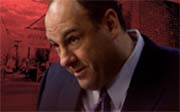
Sopranos fans may remember Tony getting his hands on a new cell phone and having the GPS function ripped out. You’ll forgive Palm and Windows Mobile execs if they feel like doing the same.

As Google’s Android adds features every week, the convergence between phone and Largest Search Company Ever blurs fast.   Word out of Google now is that phones using Android will change the search results based on the phone’s location to a degree of granularity we never saw with computers. If I type the word “pizza” in a Google session on my computer, I’ll receive results about local pizza restaurants, not necessarily about pizza recipes, pizza stores, frozen pizza or anything other than a ranking that can eventually be monetized or propel the company into a data leadership role no other company can match. Now phones with Google’s Android operating system do the same thing.  Using Google’s Search Suggest feature, the company suggests that

users in the Boston metro area begin typing “Muse”, suggestions such as “museum of science boston” and “museum of fine arts boston” are provided because people near Boston frequently look for these very popular museums

For now, people with Android phones have to opt-in to the service by visiting “Settings” on their search page and checking off  “Allow use of device location”. There is no word from Google on how it will use the convergence of the demographics it collects about you, your real-time physical location from your Google Microchip phone, the search information you’re presented and your subsequent real-time actions including calling someone, texting someone, walking to the museum (and just how long did that take you by which route so we can update Google Maps’ walking directions?). Perhaps Tony Soprano had the right idea after all.

Regardless of the upsets (Jets win for the first time since before West Side Story?), who plays in this year’s Super Bowl is irrelevant for advertisers, even with a big market team like New York in the hunt. That’s because the cost to air a commercial this year decreased, not a healthy trend for any event, much less the pseudo holiday of the Super Bowl.

Pepsi, home to Justin Timberlake, Britney Spears, Michael Jackson and countless other stars in the past is bailing on the entire event.  Instead, Twitter is all a titter about Pepsi Refresh, a grant program with a social media hooks.   Giving money to the community at large for various good works is certainly a longer lasting way to spend millions, but there is a message here for all businesses, large and small.

The biggest events — the Academy Awards, the Super Bowl, US presidential elections — still draw huge crowds and dominate the national news cycle for a long period, but at least one savvy marketing outfit in Pepsi has decided that an Internet spend tied to social media is a smarter bet.  They may not have the right answer.  They might not even have asked the right questions, and your business may be totally different, but after watching this Britney video from two games ago, decide whether the buzz Pepsi got from Ms. Spears is really bigger than what they’ll get throughout 2010.